

Asthma Attack: C.A.R.E

An asthma attack is a potentially life-threatening emergency.
Recognizing the signs of an asthma attack and responding quickly could save a life.
This Asthma Awareness Month, Asthma Canada is calling on all people across Canada to know the signs of an asthma attack, and:
If an asthma attack happens, C.A.R.E.
What is an asthma attack?
An asthma attack happens when the airways in your lungs become tight, swollen, and filled with extra mucus, making it difficult to breathe. It may begin suddenly or build up over hours or days, and can become serious or life-threatening if not treated quickly.
Each year, thousands of people in Canada are hospitalized because of asthma attacks. Tragically over 300 people still die from asthma attacks annually, although many of these deaths are preventable with proper asthma management and timely treatment.
Signs of an asthma attack include:

Wheezing
You may hear a high-pitched whistling sound when they breathe out because their airways are narrowed.

Distressed breathing
They may be breathing fast or shallow, and it can look like they can’t get enough air.

Persistent coughing
They have an ongoing cough that doesn’t go away.

Difficulty speaking
They cannot speak in full sentences or speak at all.

Lips/fingernails turning blue/grey
Their lips or nails may turn blue or grey, a sign their body isn’t getting enough oxygen.

Chest tightness
Their chest may feel heavy, squeezed, or hard to expand.
Other signs of an asthma attack include: feeling very tired or weak, feeling anxious or panicked, reduced peak flow readings (if using a peak flow meter), and using the neck or chest muscles to breathe (visible effort when breathing).
🚨 Recognizing the signs of an asthma attack and responding quickly could save a life. 🚨
If an asthma attack happens: C.A.R.E.

C
Calm
Keep them calm & reassure them
- Let them know you are there for them.
- Don’t leave them on their own.

A
Air
Sit them upright & encourage slow breathing to ensure air reaches their lungs
- This position helps the lungs expand more easily.
- Do not have them lie down or stand up.
- Loosen tight clothing around the chest and neck.

R
Rescue Inhaler
Help them find and use their rescue inhaler (usually blue)
- Use a spacer if available to deliver medicine more effectively.
- A spacer is a device used with a metered-dose inhaler (MDI) to make it easier to inhale the medication properly.
- Follow their Asthma Action Plan for the number inhaler puffs and timing between each puff.
- If no Asthma Action Plan is available: continue giving puffs every few minutes as needed until symptoms improve or help arrives.

E
Emergency
Call 911 if there is no inhaler or no improvement after using the inhaler
- Call immediately if you see any of these signs:
- they are struggling to speak, breathe, or stay alert
- their lips or fingernails turn blue or grey
- Follow the operator’s instructions while waiting for help.
IMPORTANT: C.A.R.E. guidance provides general public information & does not replace personalized advice or an Asthma Action Plan from a healthcare professional.

Get Free & Personalized Support
If you have questions on managing your asthma or preventing asthma attacks, please contact our free Asthma & Allergy HelpLine at 1-866-787-4050 or info@asthma.ca.
Our team of Certified Respiratory Educators will happily assist you with your asthma control and help put your mind at ease.
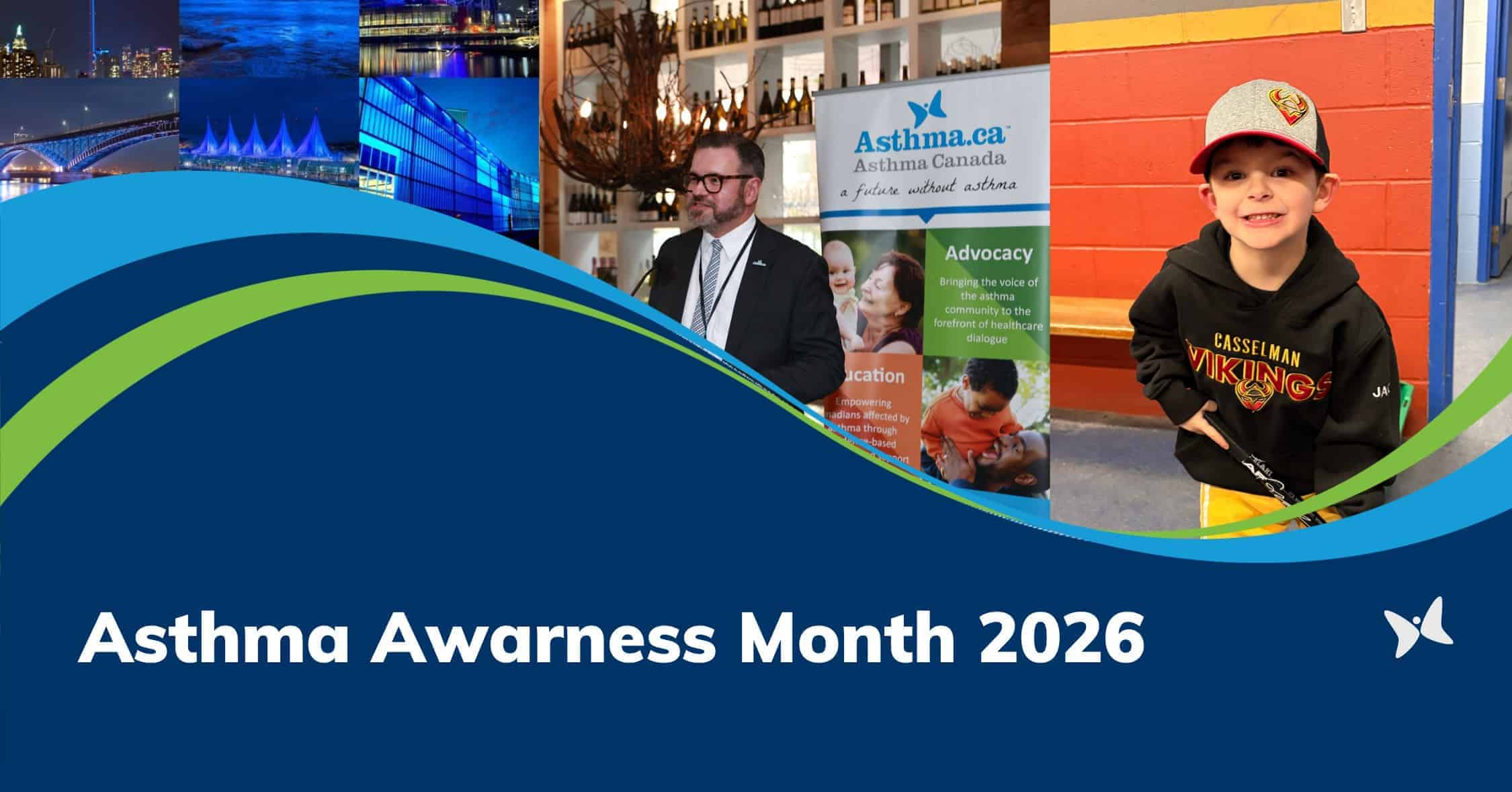
Asthma Awareness Month 2026
About Asthma Awareness Month 2026
This Asthma Awareness Month, we’re shining a light on asthma attacks, what they are, how to recognize them, and what to do when they happen.

Asthma Attack Community Stories
Visit our Community Stories page to hear real experiences from people living with asthma across Canada and see why awareness matters.